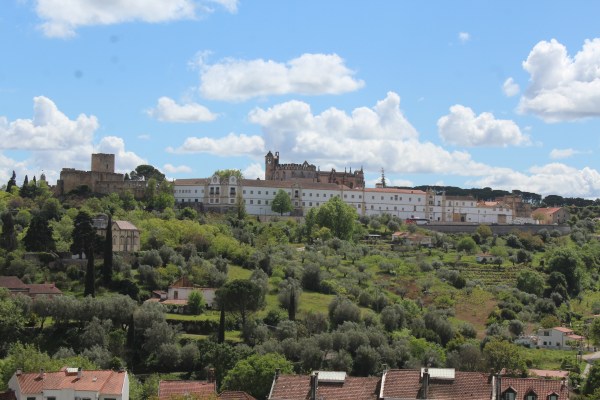
In 1160, the construction of a fort on the hill of Tomar began. It was built high up on a hill by the Tomar River and was considered impregnable by the enemies of the West. The original castle was joined by the first cloister just two years later, and seven more were to follow. For centuries, the Temples could be sure of the favor of the Portuguese kings and continued to expand the castle. Their financial resources were almost infinite.
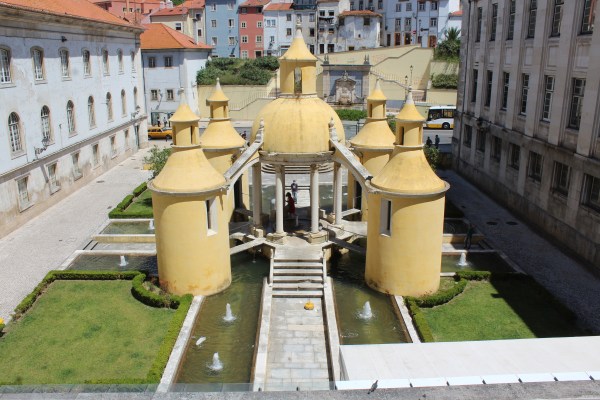
Coimbra, Portugal part 5 – Cloister of Manga
The Jardim da Manga, also known as Cloister of Manga, is a Renaissance architectural work with fountains, located behind the Santa Cruz Monastery in Coimbra, Portugal. It has been classified as a National Monument since 1934.
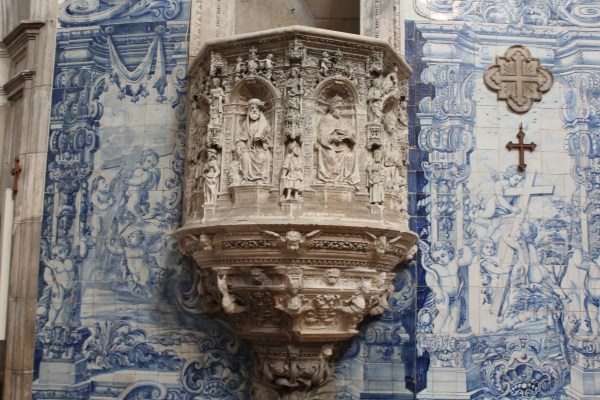
Coimbra, Portugal part 4 – Monastery Church Santa Cruz
The portal facade was built in two construction phases. Between 1507 and 1513 the two mighty towers were built. The portal was designed by the master builder Diego de Castillo and executed between 1522 and 1526 by Nicolas de Chantereine.
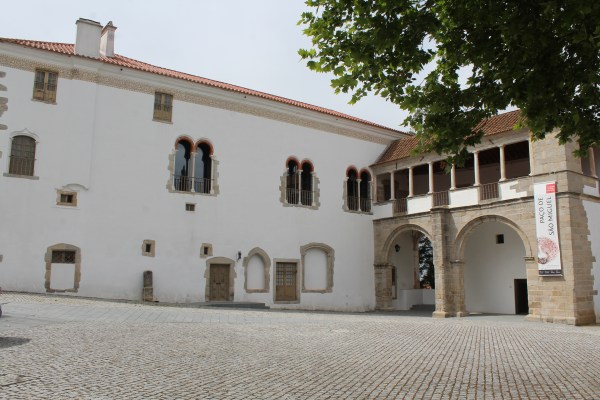
Èvora, Portugal part 2 – Palace of King Manuel I.
The Palace of King Manuel I. was a residence of the Portuguese Kings in Portugal. At begin of the history of the Palace it was a monastery of Franciscans Monks...