
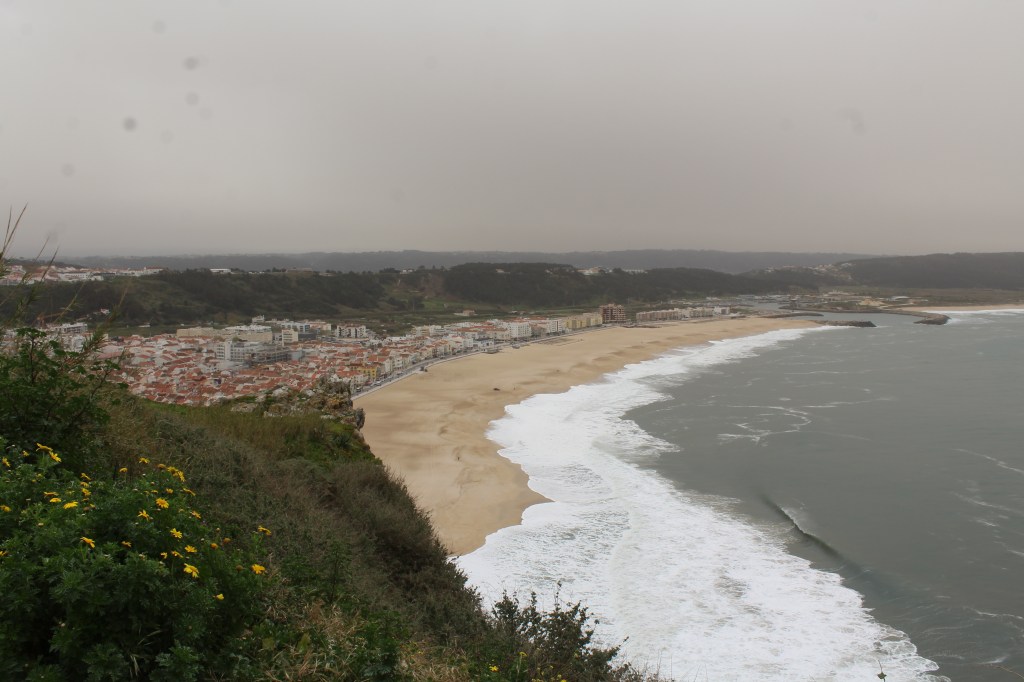
The beach town of NAZARÈ, with its mild climate and natural beauty, has very ancient traditions associated with the artisanship of fishing.
The long, crescent-shaped sandy area, which is also the sea front of the town, is known for its beauty and for the colorful umbrellas that decorate the white sand beach, which finds its contrast in the blue of the water.
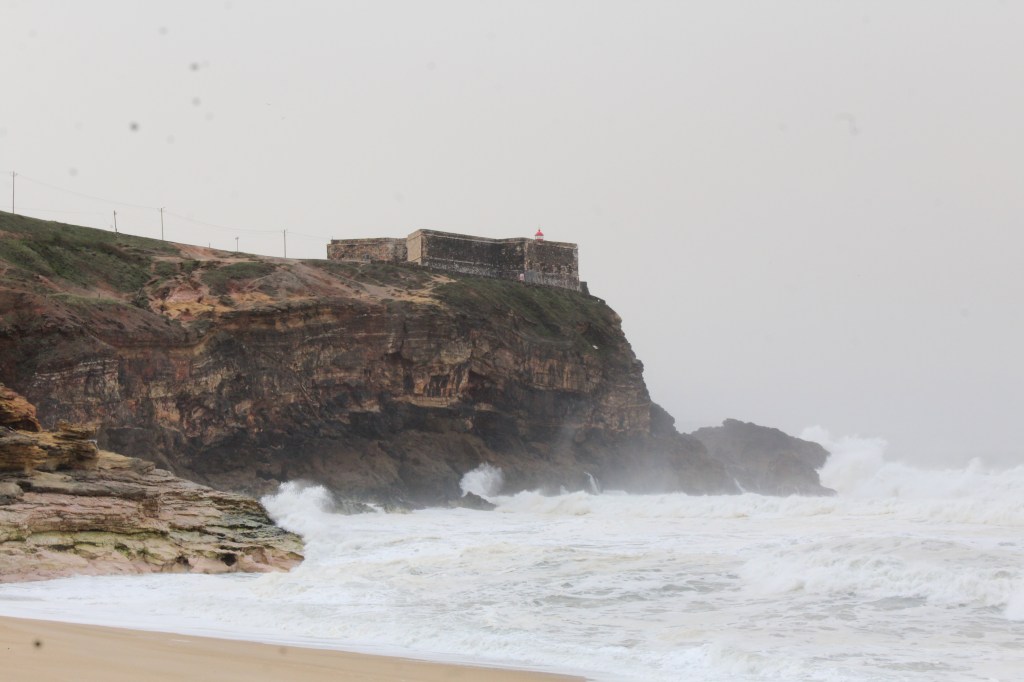
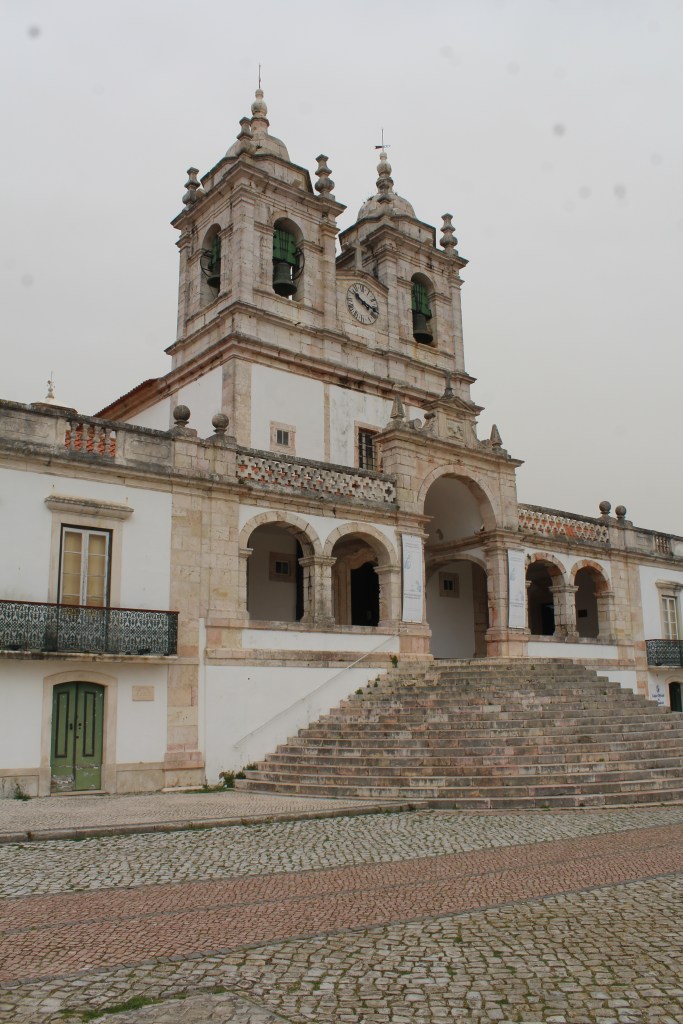
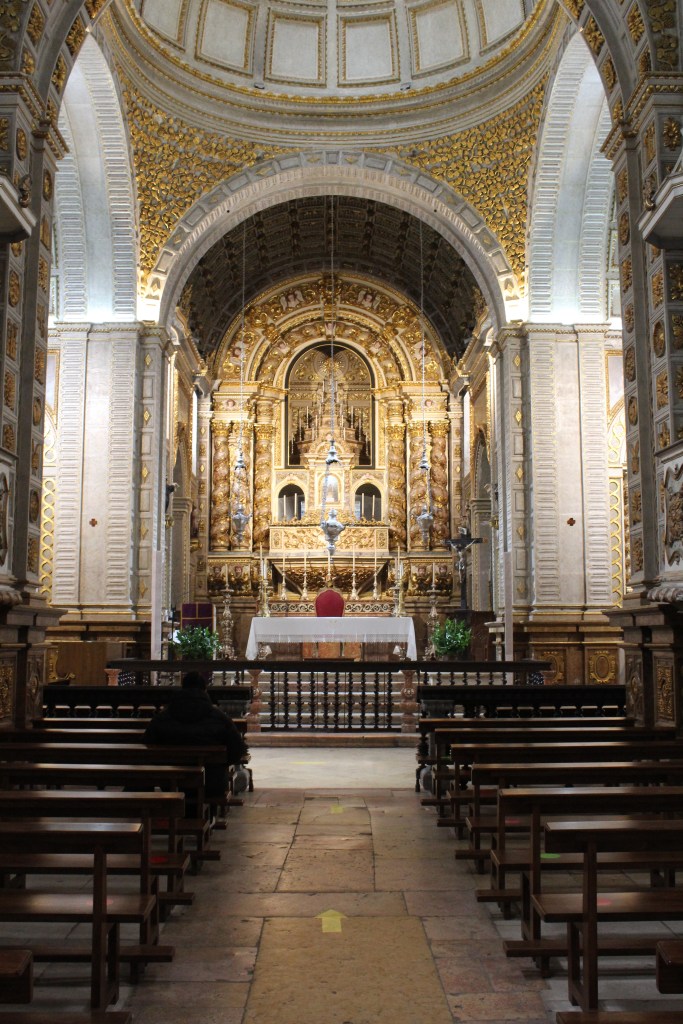
Turning towards the sea, we see an interesting headland on the right side. It is Sítio, from where we have one of the most famous panoramic views of the Portuguese coast. There are 318 meters of rock that falls from the top to the sea, which, if you are one of the bravest, you can reach on foot or otherwise by cable car. At the top we meet the chapel Ermida da Memória, where the legend is told about a miracle that the Virgin Mary performed when she prevented the horse of a nobleman, D. Fuas Roupinho, from plunging into the abyss. Whether true or not, at the Miradouro do Suberco viewpoint you can see the imprint left by the horseshoe on that foggy morning of 1182. In Sítio, we can also visit the Santuário de Nossa Senhora da Nazaré sanctuary and, not far from it, the Museu Dr. Joaquim Manso museum, where we can learn more details about Nazaré’s traditions.
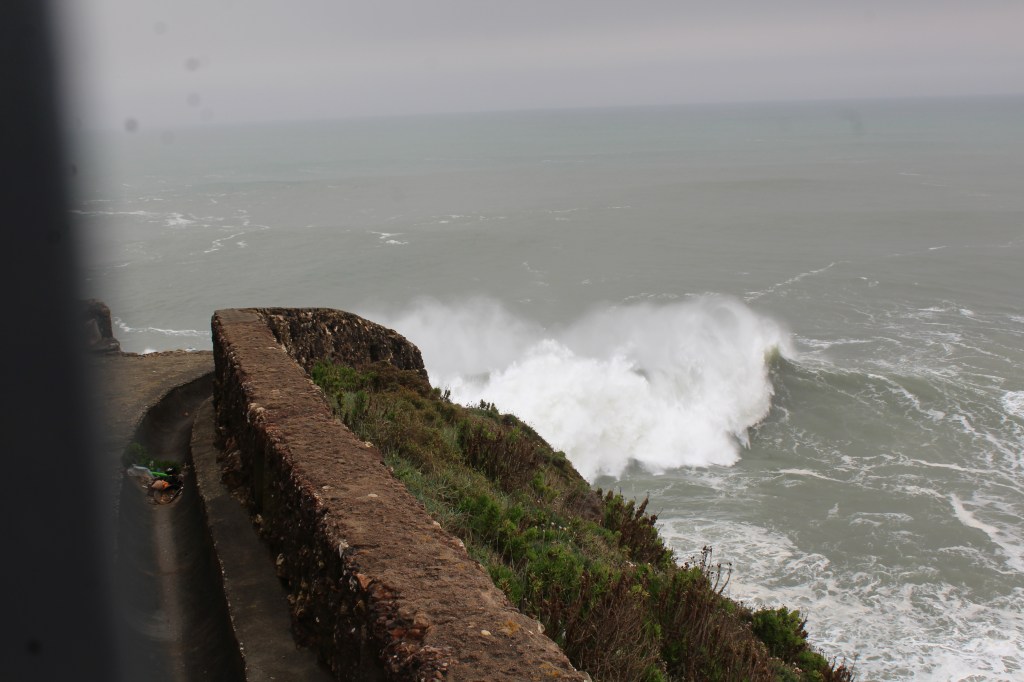
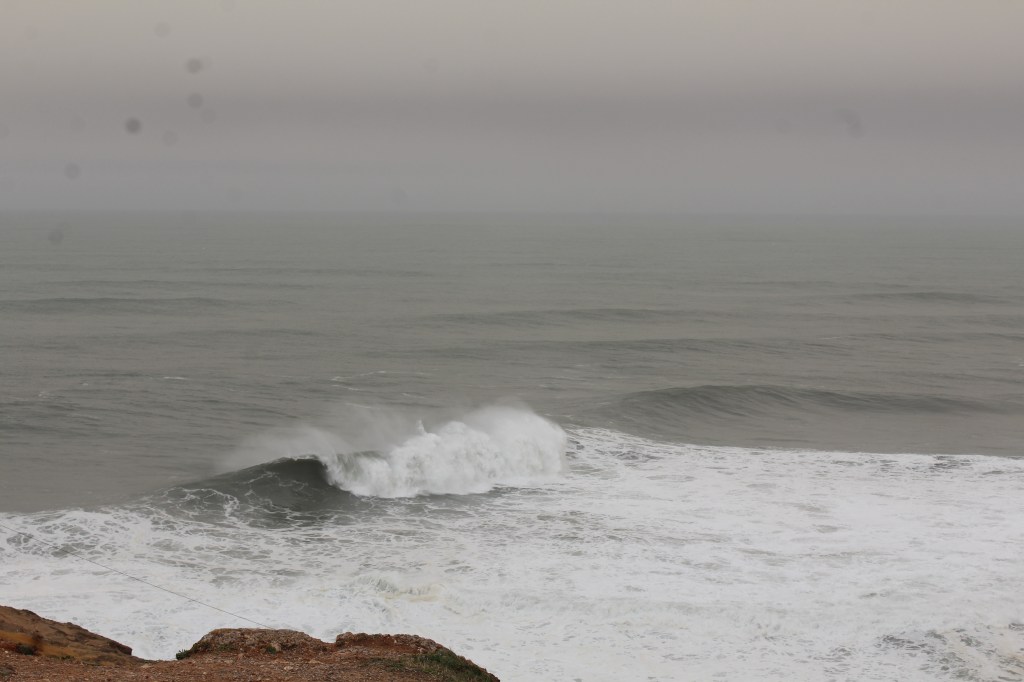
At the moment, the waves and surfing are the great attraction of this city thanks to the “Canhão da Nazaré” (Cannon), an underwater geomorphological phenomenon that allows the formation of gigantic and perfect waves. It is the largest underwater canyon in Europe, 170 kilometers along the coast, descending to a depth of 5000 meters.
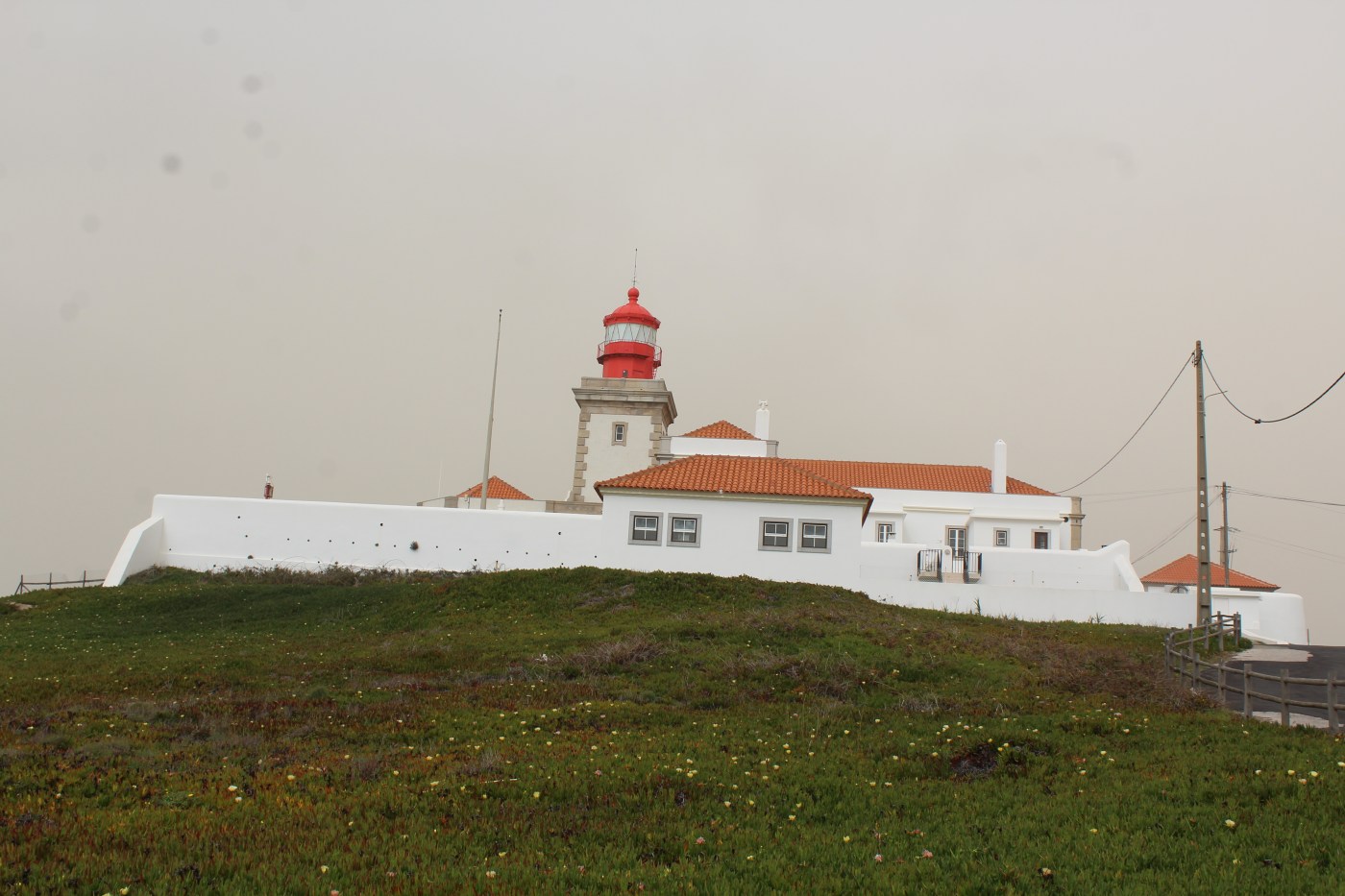
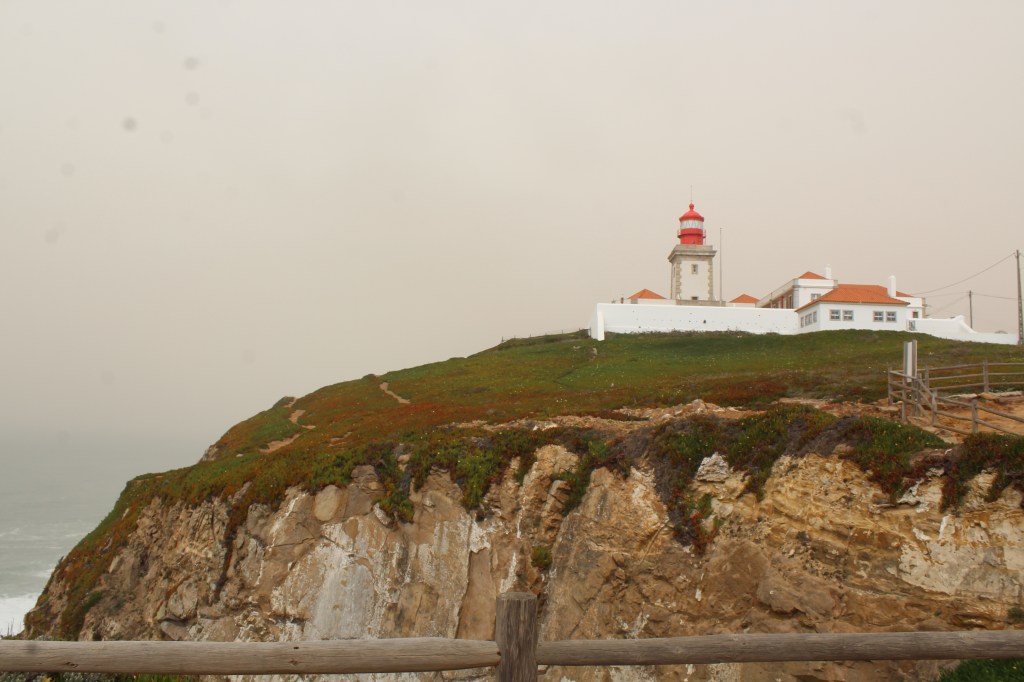
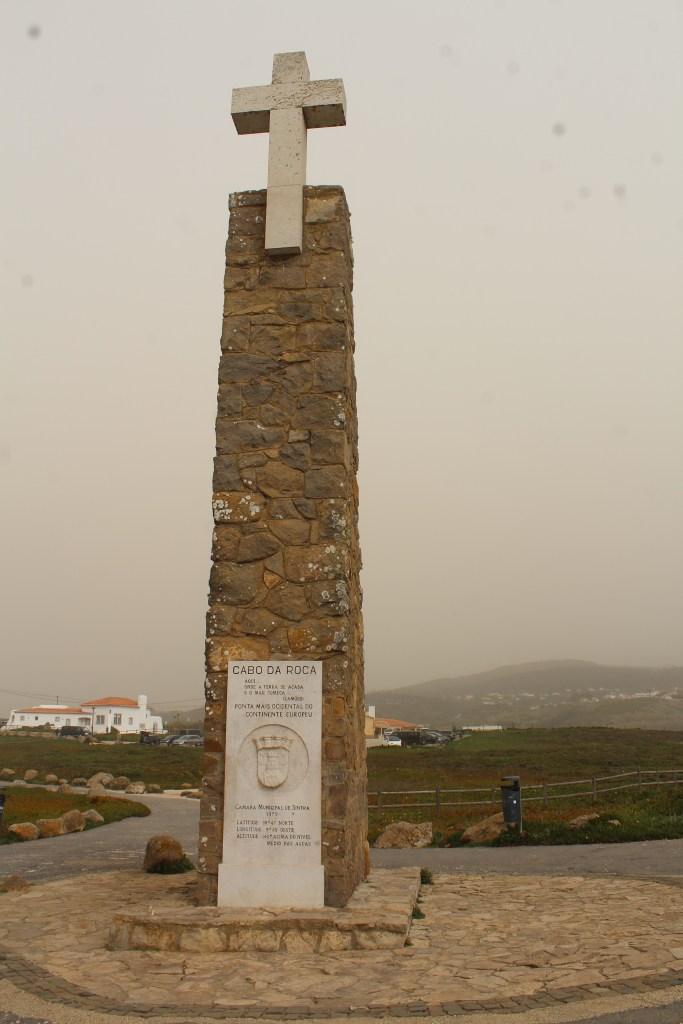
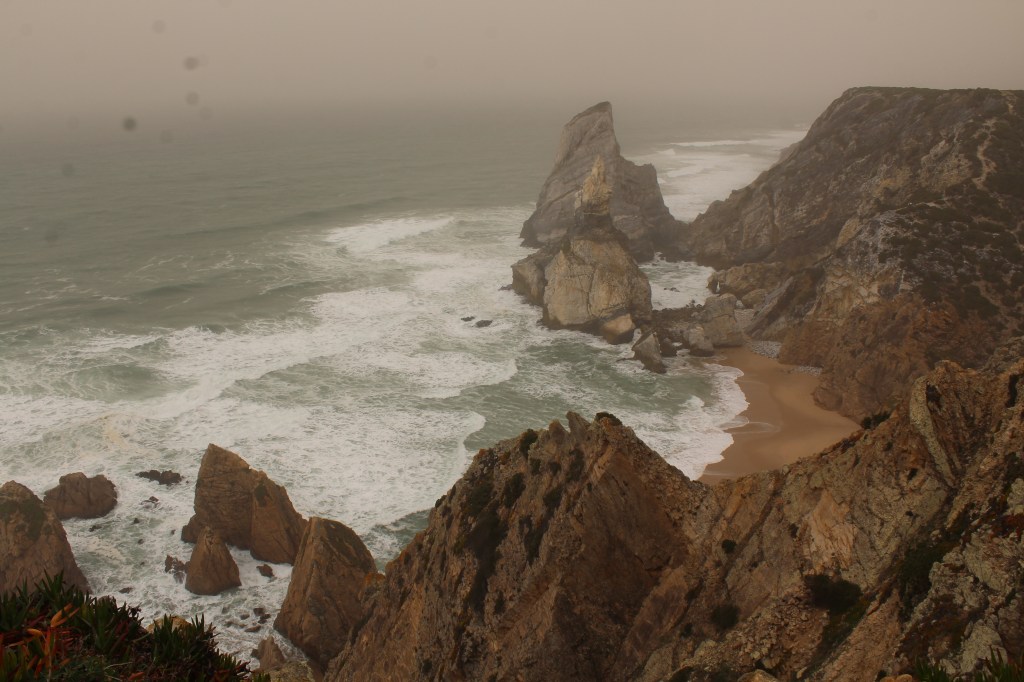
CABO DA ROCA is the westernmost point of the mainland of the European continent. It is located in Portugal on the Atlantic coast west of Lisbon at an altitude of 140 meters above sea level. Cabo da Roca belongs to the municipality of Colares in the district of Sintra.
The slopes are invaded by the edible noonday flower. This is designated there as a “dangerous invader”. Rare peregrine falcons and kestrels nest in the cliffs.
The Portuguese national poet Luís de Camões described the place with the following words: Here… Where the earth ends and the sea begins.
The westernmost point of the European continent is considered to be the Azores island of Ilhéu do Monchique with the longitude, excluding Greenland.
The lighthouse at Cabo da Roca is the westernmost lighthouse on the European mainland. It was put into operation in 1772. This makes it currently the second oldest lighthouse in Portugal. In the following years, the lighthouse technology was modernized several times according to the technical progress. In 1897 it was electrified with locally produced electricity. In 1982 it was connected to the power grid and finally automated in 1990. Since 1947, the lighthouse has been equipped with 3rd order optics with 500 mm focal length. The tower has a height of 22 m, but the fire is at a height of 165 m above sea level because of the tower’s location on the cape. The range of the fire is thus 48 km.
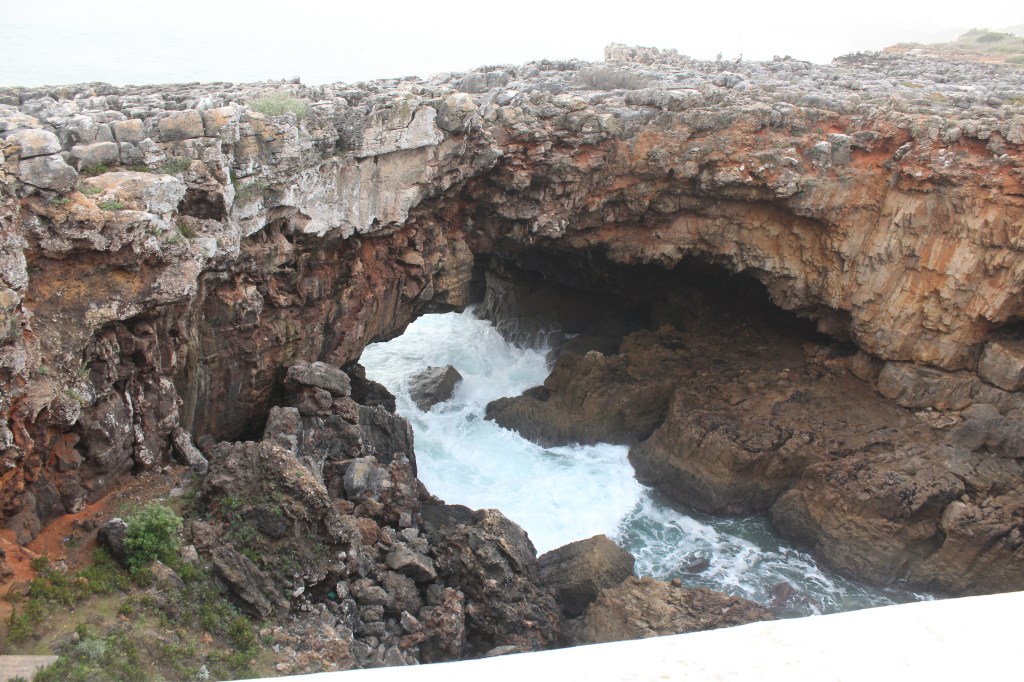
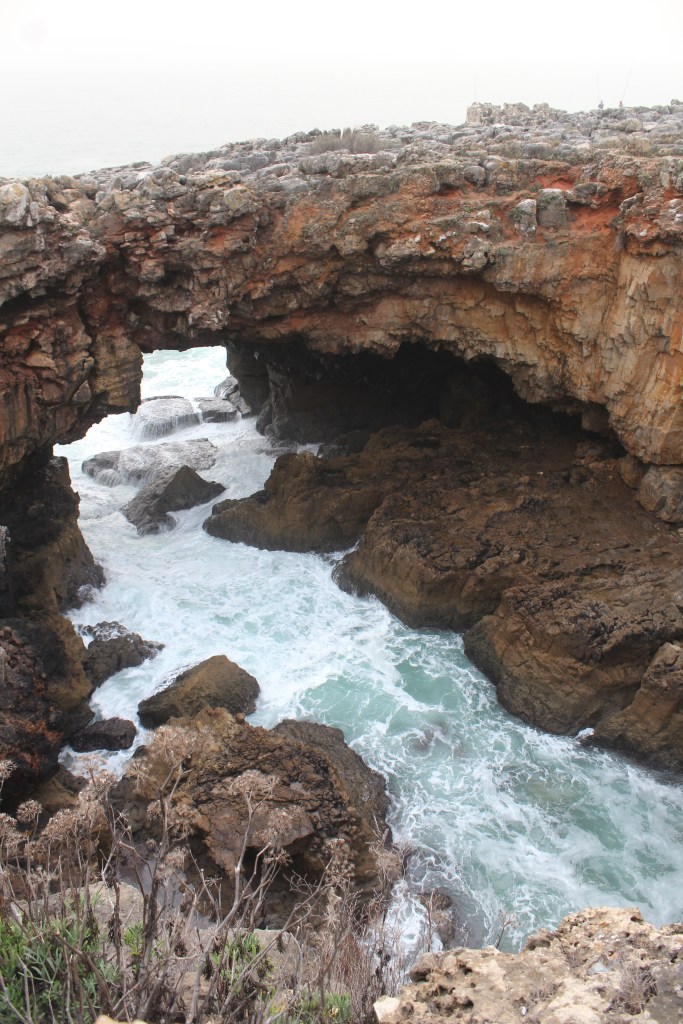
Near Cascais, on the Costa da Guia not far from Lisbon, lies a fascinating geological phenomenon: the BOCA DO INFERO – the Hell’s Mouth. It is a gorge or cave connected to the Atlantic Ocean by a rocky gate.
The sea piles up white-foaming and relentless at this spot, thundering against the sheer cliffs and through the rocky gate. The power and destructiveness of the Atlantic is already documented in a film by Englishman Henry Short from 1896.
The place owes its name Hell’s Mouth precisely to these breakneck waves that push through the “maw” here, producing a groaning sound depending on the height of the water. Today the place is well prepared for tourists. A path runs over the cliffs, so you can admire the Boca do Inferno also from the Atlantic Ocean.
The Boca do Inferno owes special fame to the old sorcerer Aleister Crowley. Crowley staged his alleged suicide here, which made it into the worldwide press in 1930. Sad but true: many people still commit suicide here, like the poet Guilherme de Faria. However, that shouldn’t stop you from visiting this magical place. It is open all year round.
Photos & Text: Rainer Georgius




 Nature & Culture
Leave a comment